What Is GAP Insurance and What Does It Cover in a Total Loss Claim?
Understanding what is gap insurance and what does it cover…
Understanding what is gap insurance and what does it cover can save you from paying thousands of dollars out of pocket when your financed or leased car is totaled. When your vehicle is destroyed in a crash or stolen, your standard auto insurance policy only pays the car’s Actual Cash Value (ACV)—its depreciated fair market value the split second before the incident.
If you owe $29,000 on your auto loan, but the insurance adjuster values your totaled vehicle at $23,000, you are legally on the hook to pay your lender that remaining $6,000 deficit for a car you can no longer drive. Guaranteed Asset Protection (GAP) insurance eliminates this financial trap by paying off the remaining difference between your primary insurer’s ACV settlement and your active loan or lease principal balance.
Because new vehicles lose roughly 20% of their value in the first year alone, drivers who put less than 20% down—or finance over 60 to 84 months—are almost immediately “upside-down” (owing more than the car is worth). Without a GAP policy or debt waiver in place, a single collision turns that negative equity into an immediate personal bill demanded by your lienholder.
Quick Summary: Total Loss & GAP Essentials
Who Needs It: Any driver financing a vehicle with less than 20% down, taking out a loan term of 60+ months, rolling over prior loan debt, or signing an auto lease.
Average Payout Timeline: 30 to 60 days after your primary auto insurance carrier issues its final ACV settlement check to your lender.
The #1 Reason GAP Claims Get Short-Paid: Policyholders fail to cancel refundable finance add-ons (like extended warranties) or exceed their contract’s strict Loan-to-Value (LTV) percentage cap.
What Is GAP Insurance and What Does It Cover? (The Payout Math)
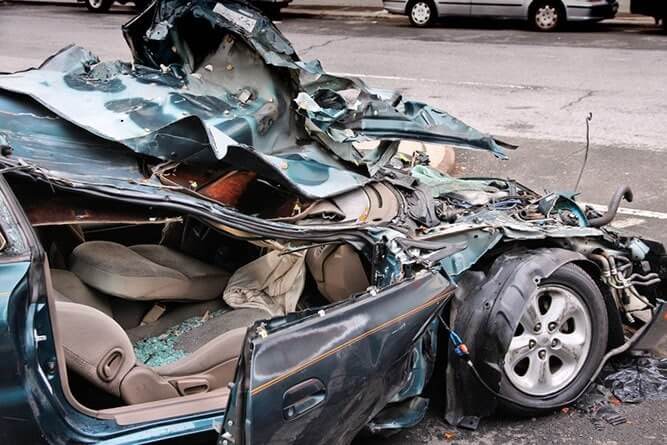
what is gap insurance coverage after vehicle total loss crash
To see what is gap insurance and what does it cover in a real-world claim, you first have to understand how insurance companies declare a vehicle a total loss. GAP coverage is only triggered when your primary auto insurer—or an at-fault driver’s liability carrier—declares your vehicle a statutory total loss due to a covered collision, a comprehensive peril (such as flood, fire, hail, or vandalism), or an unrecovered vehicle theft.
Insurance adjusters do not guess whether your car is totaled; they are bound by state total loss threshold laws. Roughly half of US states enforce a strict statutory percentage threshold. For example, under Florida Statutes § 319.30(3)(a), a vehicle is an automatic total loss when the cost to repair it reaches 80% or more of its undamaged retail value, whereas New York 15 NYCRR § 20.20 sets the threshold at 75%. Other states use the Total Loss Formula (TLF), where your car is declared totaled as soon as the estimated repair cost plus the vehicle’s scrap salvage value equals or exceeds its pre-crash ACV.
Once your vehicle crosses that threshold, your primary insurer calculates the ACV, deducts your collision or comprehensive deductible, and wires the net settlement directly to your auto lender. If a loan balance remains, your GAP policy steps in to cover the deficit.
The Hidden Ceiling: Loan-to-Value (LTV) Payout Caps
A common misconception when drivers research what is gap insurance and what does it cover is assuming that GAP acts as a blank check for any amount owed on a loan. In reality, almost every GAP contract enforces a strict Loan-to-Value (LTV) ceiling or a flat percentage cap.
Dealership GAP waivers typically cap coverage at 120% to 150% of the vehicle’s MSRP (for new cars) or J.D. Power/NADA retail book value (for used cars) on the date you signed the loan. Meanwhile, standard auto insurer “Loan/Lease Payoff” endorsements are much stricter—frequently capping their payout at just 25% of the vehicle’s ACV on the date of the crash.
What Is GAP Insurance and What Does It Cover? The Hidden LTV Payout Caps
How to Audit Your Contract’s LTV Cap in 3 Steps
Locate Your Retail Installment Sale Contract: Find the original cash price/MSRP of the vehicle before taxes and add-ons (e.g., $25,000).
Check Your GAP Addendum’s Maximum LTV: Look for the “Maximum Eligibility Limit” or “LTV Cap” clause in the fine print (usually 120% or 125%). Multiply your car’s initial value by that percentage ($25,000 × 1.25 = $31,250 maximum covered financing).
Compare Against Your Total Financed Amount: If you rolled $8,000 of old debt from a trade-in into that $25,000 car—bringing your total loan to $33,000 (a 132% LTV)—your GAP provider will refuse to cover the $1,750 financed above their 125% ceiling.
Line-Item Exclusions: What Does GAP Insurance Cover vs. Reject?
“Before buying a policy, every driver needs a realistic breakdown of what is gap insurance and what does it cover versus what it completely excludes from your final payout calculation.”
Even when your total loan falls below the LTV ceiling, many drivers are shocked to receive a collection bill for $1,200 to $3,500 from their lender after their GAP payout clears. When evaluating what does gap insurance cover, you have to look closely at what GAP administrators strip out of their payout calculation.
Before issuing a check, the GAP adjuster requests your complete loan payment ledger and original dealership purchase contract. They will systematically deduct the following excluded line items from their settlement:
Primary Policy Deductibles: Most auto insurance GAP endorsements do not reimburse your $500 to $2,000 collision or comprehensive deductible. (Some standalone dealership GAP waivers include a “deductible waiver benefit” up to $1,000, depending on state regulations).
Rolled-Over Negative Equity: If you traded in a vehicle you still owed money on and rolled that unpaid balance into your new auto loan, GAP will subtract that prior debt from your payout.
Delinquent Payments & Late Fees: Missed monthly loan installments, deferred payment extensions, late penalties, and accrued penalty interest built up before the crash date remain 100% your responsibility.
Refundable Finance & Aftermarket Add-Ons: Extended warranties (Vehicle Service Contracts), tire-and-wheel protection plans, prepaid maintenance packages, key-fob replacement plans, and credit life/disability insurance rolled into your loan principal are strictly excluded.
Non-Factory Vehicle Modifications: Custom lift kits, aftermarket audio systems, or specialty wheels that were not part of the original factory VIN build.
Personal Property Inside the Vehicle: Neither your primary auto collision policy nor your GAP contract covers personal belongings destroyed in a crash or stolen from your car. Questions like do you have to have homeowners insurance or does renters insurance cover jewelry, laptops, and work gear left inside a totaled vehicle are governed strictly by off-premises personal property provisions (Coverage C) of a property insurance policy, never your auto loan protection.
The Extended Warranty Cancellation Rule (How to Erase Your Remaining Balance)
If you financed a $2,500 extended warranty and a $700 tire-and-wheel package at the dealership, your GAP provider will deduct that $3,200 from their payout. Why? Because those contracts are legally refundable once the vehicle is destroyed.
Do not pay that $3,200 shortfall out of your bank account. Instead, follow this exact cancellation procedure the day your car is declared a total loss:
Request Your Total Loss Verification Letter: Get the official total loss determination letter and odometer reading statement from your primary auto insurance adjuster.
Contact the Dealership’s Finance & Insurance (F&I) Manager: Submit a written cancellation request for all financed Vehicle Service Contracts (extended warranties), maintenance plans, and tire packages, attaching the total loss letter as proof of date of loss.
Verify the Pro-Rata Lienholder Credit: By law, the warranty administrator must calculate a pro-rata refund based on the unused time and mileage remaining on the contract as of the crash date. That refund check is sent directly to your auto lender and applied to your principal balance—wiping out the exact dollar amount your GAP insurer excluded.
What to Do After a Car Accident Not Your Fault When You Are Upside-Down
One of the most frustrating financial realities drivers face is finding out how third-party claims work when they owe more than their car is worth. When researching what to do after a car accident not your fault, many victims assume that because the other driver was 100% negligent, the at-fault driver’s insurance company must pay off their entire auto loan.
They do not. Under US state tort law and the legal principle of indemnity (restitutio in integrum—restoring the injured party to their original financial position), an at-fault driver’s Property Damage Liability (PDL) insurer is only legally obligated to pay the fair market value (Actual Cash Value) of the property they destroyed, plus applicable state sales tax and title transfer fees as mandated by state regulators like the California Department of Insurance (CDI) or the Texas Department of Insurance (TDI). The at-fault driver’s insurer has zero legal connection to your financing contract, your interest rate, or your negative equity.
Demand the Full Valuation Report: Before accepting the at-fault insurer’s settlement number, demand their complete market valuation report (typically generated by CCC Intelligent Solutions, Mitchell, or Audatex).
Audit the Comparable Vehicles (“Comps”): Check the local dealer listings used to price your car. Look for missing factory packages, incorrect trim levels, or unfair condition deductions. Learning how to dispute a lowball total loss ACV valuation report forces the primary insurer to raise their ACV payout—which is vital if your GAP policy has a strict 25% payout cap.
Confirm Sales Tax and Title Fees Are Included: In most states, total loss settlements must include state and local sales tax plus pro-rated registration fees. Ensure these are paid by the primary carrier so they don’t eat into your GAP limit.
Notify Your GAP Administrator Immediately: Do not wait until the primary claim is closed to open your GAP file. Call the number on your GAP addendum as soon as the vehicle is deemed a total loss to get your claim number and checklist.
Authorize the Primary Payout to Your Lienholder: Instruct the at-fault insurer to send the agreed ACV settlement directly to your auto lender, and obtain a copy of the itemized payment breakdown.
Cancel All Financed Dealership Add-Ons: Trigger the pro-rata refund on your extended warranties and service plans so the credit hits your loan ledger before GAP calculates its final check.
Understanding What Is GAP Insurance and What Does It Cover During Third-Party Claims
Knowing what is gap insurance and what does it cover during a third-party liability claim also requires strict adherence to paperwork deadlines. Most GAP administrators enforce a rigid 30-day to 90-day filing window starting from the date the primary insurance company issues its settlement check. Miss that deadline, and your GAP claim can be denied for late notice.
To prevent administrative delays, assemble and submit this complete document packet to your GAP provider:
Critical Credit Warning: Keep Making Your Monthly Car Payments A GAP claim typically takes 30 to 60 days to audit and pay out after the primary insurer’s check clears. Until your lender’s accounting department receives the final GAP check and marks your loan balance as $0.00, your monthly auto loan payments are still legally due. If you stop paying while waiting on GAP, your lender will report a 30-day delinquency to Equifax, Experian, and TransUnion—and GAP will refuse to pay the resulting late fees. Keep paying your normal monthly bill; any overpayment on the principal will be refunded directly to you by the lender once the GAP check posts.
Dealership GAP Waivers vs. Auto Insurer GAP Endorsements
When drivers ask what is gap insurance and what does it cover, they are often looking at two legally distinct financial products that use the same nickname. Where you buy your coverage changes how it is regulated, what it costs, and how much it pays out.
According to guidelines from the National Association of Insurance Commissioners (NAIC), buying GAP at a car dealership means you are purchasing a Contractual Debt Waiver Addendum. It is not actually an insurance policy; it is a bilateral agreement added to your finance contract in which the lender agrees to waive the remaining debt if the vehicle is totaled. Because it is a finance product, it is governed by state lending statutes and federal Truth in Lending rules.
Conversely, buying GAP from your auto insurance carrier (often called Loan/Lease Payoff Coverage) is a regulated Policy Endorsement governed by your State Department of Insurance. When comparing new car replacement coverage vs. loan/lease payoff endorsements, the financial differences between dealership waivers and insurer endorsements are substantial:
Your Legal Right to a Dealership GAP Refund
If you paid $800 for a dealership GAP waiver and later trade in your car, refinance your auto loan with a credit union, or pay off the loan early, you are entitled to a pro-rata refund of the unused portion of that GAP fee.
In recent enforcement actions detailed in the Consumer Financial Protection Bureau (CFPB) Supervisory Highlights, federal regulators penalized auto lenders for failing to return unearned GAP waiver fees after early loan payoffs. Furthermore, several states—including California, Colorado, and Texas—have enacted strict statutory mandates requiring lenders and dealers to automatically calculate and credit unearned GAP fees upon early loan termination. Always audit your final loan payoff statement when refinancing or selling a car to verify your unused GAP refund was credited.
Understanding the legal fine print behind what is gap insurance and what does it cover also depends heavily on where you buy the policy—whether from an auto dealership or your existing car insurance company
Frequently Asked Questions
What is gap insurance and what does it cover if I lease a vehicle instead of buying?
If you are evaluating what is gap insurance and what does it cover on a leased car, check your contract before buying a separate policy. Most captive automaker finance companies (such as Honda Financial Services, Toyota Financial Services, and Ford Credit) automatically include a built-in GAP Waiver Provision inside the lease acquisition fee. This protects you from owing the difference between the insurer’s ACV payout and the leasing company’s early termination payoff figure. However, always inspect your lease agreement for the exact words “GAP Waiver Included” so a dealership F&I manager does not charge you $800 for duplicate coverage you already have.
Does GAP insurance pay out if I let my collision coverage lapse?
No. Every dealership GAP waiver and insurer endorsement contains a strict “condition precedent” requiring you to maintain active Comprehensive and Collision insurance on the vehicle throughout the entire loan term. If you cause an accident after dropping collision coverage—or after letting your primary auto policy lapse for non-payment—your GAP contract is legally void, and the GAP administrator will deny your claim in full. The only exception is if an insured, at-fault third-party driver totals your car and their liability carrier pays the full ACV.
Your Next Move: Total Loss & GAP Action Checklist
Now that you know what is gap insurance and what does it cover, you can prevent both overpaying for coverage you no longer need and getting short-paid after a wreck. Take these immediate steps based on your current situation:
Now that you clearly understand what is gap insurance and what does it cover, you can take immediate action to audit your active loan, dispute lowball settlement numbers, and protect your finances.
If Your Car Was Just Totaled in a Crash:
Request the complete Total Loss Valuation Report from the primary or at-fault adjuster and audit the comparable vehicles before signing a release.
Call your dealership’s F&I department today to cancel all financed extended warranties, maintenance plans, and tire packages so the pro-rata refund lowers your loan principal.
Submit your full 5-document GAP claim packet within 30 days of the primary settlement, and keep making your monthly auto loan payments until your lender confirms a $0.00 balance in writing.