Can You Drop an Insurance Claim After Filing? A Driver’s Legal & Financial Guide
Yes, can you drop an insurance claim after reporting it?…

Yes, can you drop an insurance claim after reporting it? Under standard US auto policy contracts, you can withdraw a first-party claim (Collision, Comprehensive, or Medical Payments/PIP) as long as your carrier has not yet disbursed settlement funds or completed repairs. If you filed in the initial shock of an accident, discovered the repair quote barely exceeds your deductible, or chose to pay out of pocket to protect a clean driving record, you hold the legal right to close the file.
However, you cannot drop a third-party claim filed against you by another driver. Determining whether can you drop an insurance claim depends on who initiated the action, whether insurance funds were generated, and how underwriters document the inquiry on your permanent record.
Claims Adjuster Takeaways
- First-Party Control: You can drop collision and comprehensive filings at any point prior to check endorsement or body shop payment disbursement.
- Third-Party Restrictions: You cannot withdraw or cancel a liability claim initiated by another motorist against your policy; your insurer is contractually bound to investigate and indemnify.
- The C.L.U.E. Record: Withdrawing a claim to a zero-dollar payout does not erase the First Notice of Loss (FNOL) from national insurance underwriting clearinghouses.
Can You Drop an Insurance Claim? First-Party vs. Third-Party Rules
When evaluating whether can you drop an insurance claim, the first distinction is policy standing. Auto insurance policies create distinct rights depending on whether you are seeking payment for your own property or shielding your assets against liability.
In a first-party claim, you are the policyholder seeking direct reimbursement under your optional physical damage coverages. Under rules outlined by the National Association of Insurance Commissioners (NAIC), an insurer cannot force you to accept indemnity funds or compel you to authorize repairs on your personal vehicle. If you inform the adjuster you want to drop the request, the carrier must comply.
Third-party claims strip away that unilateral authority. When another motorist, passenger, or property owner files a claim against your Bodily Injury (BI) or Property Damage (PD) liability coverage, they are pursuing a tort claim against your assets. Your auto policy contains an explicit “Duty to Defend and Indemnify.” This legal covenant grants the insurer exclusive rights to settle, negotiate, or litigate those allegations on your behalf—even if you insist you were not at fault and demand they close the file.
| Claim Category | Applicable Coverages | Who Controls Legal Standing? | Can You Drop It? | Adjuster Procedural Action |
| First-Party | Collision, Comprehensive, MedPay, PIP | Policyholder (You) | Yes (prior to payment) | Closes claim as Closed Without Payment (CWOP) |
| Third-Party | Property Damage Liability, Bodily Injury | Adverse Claimant (Other Driver) | No | Investigates liability, calculates exposure, resolves independently |
Related Guide: If another driver was involved in the collision, read our full breakdown on how insurance companies determine fault in auto accidents to understand how liability affects your options.
.
The Point of No Return: When Is It Too Late to Drop an Insurance Claim?
Timing dictates your rights. The life of an auto claim follows clear procedural milestones, and your ability to cancel changes as funds change hands.
Phase 1: Adjuster Assigned & Estimate Generated (Safe to Drop)
At this stage, an adjuster has written a preliminary estimate, reviewed photos, or dispatched an appraiser. No funds have cleared, and no electronic repair directives have been executed.
You can drop an insurance claim during this window with a direct call and email to the claim representative. The adjuster reclassifies the file as Closed Without Payment (CWOP) and archives it.
Phase 2: Settlement Check Issued but Uncashed (Conditional)
If an indemnity check was issued, the claim remains open until the transaction completes. Withdrawing at this stage requires specific actions:
- Do not deposit, sign, or negotiate the draft.
- Return the physical check via certified mail alongside a formal, written statement of claim withdrawal.
- If your carrier uses automated direct deposit (ACH), the point of no return occurs the moment those funds hit your banking institution.
Phase 3: Check Cashed or Releases Executed (Too Late)
Once you endorse a settlement draft, accept an ACH transfer, or execute a signed Release of All Claims, the contract is finalized. You cannot drop an insurance claim once funds have cleared or releases are executed, because the carrier’s contractual indemnity obligations have been satisfied under state contract law.
[Phase 1: Claim Assigned / Appraised] ────> Safe to withdraw; request CWOP status.
                  │
[Phase 2: Settlement Check Issued]   ────> Conditional; return uncashed draft with letter.
                  │
[Phase 3: Funds Endorsed / Cleared]  ────> Irrevocable; contract fulfilled and settled.
The Hidden Trap: Will Your Rates Increase on a “Zero-Dollar Claim”?
A frequent point of confusion is whether closing a claim at zero dollars shields you from rate revisions. Drivers often ask: if you drop an insurance claim and the carrier pays nothing, will your premiums stay the same?
The moment you notify your carrier of an incident, a First Notice of Loss (FNOL) is recorded. That incident is transmitted directly to industry clearinghouses: LexisNexis Comprehensive Loss Underwriting Exchange (C.L.U.E.) and Verisk A-PLUS.
[Accident Occurs]
       │
[First Notice of Loss (FNOL) Created]
       │
[Loss Entry Transmitted to C.L.U.E. / Verisk]
       │
[Claim File Formally Dropped at $0 Payout]
       │
┌────────────────────────┴────────────────────────┐
▼                                                 ▼
[Loss-Free Discounts Forfeited]     [State Statutory Surcharge Shields]
(Frequency-tier adjustments occur)  (E.g., CA Ins. Code § 1861.02 / TX DOI rules)
Even after you drop an insurance claim and it is classified as $0 paid, underwriters evaluate that entry using three distinct criteria:
- Claim Frequency Algorithms: Underwriting models evaluate frequency separately from severity. An insured with three zero-dollar claims in two years presents a statistically higher future loss probability than an insured with a clean history.
- Loss-Free Discount Removal: Most preferred-tier carriers offer 10% to 20% discounts for policyholders with no reported losses over 36 to 60 months. Initiating an FNOL—even if you later drop an insurance claim—frequently voids this tier discount at renewal.
- State Statutory Protections: State insurance codes protect drivers against specific surcharges. Under California Insurance Code § 1861.02 (Proposition 103), carriers cannot apply accident surcharges if you were not principally at fault. Similarly, guidelines from the Texas Department of Insurance (TDI) restrict rating penalties for zero-dollar comprehensive losses, including glass damage or weather events.
Before choosing to drop an insurance claim, check your state insurance department’s rules regarding rate surcharges on non-payout claims.
When Does Dropping an Insurance Claim Make Financial Sense?
Worth Reading: Wondering what happens if repair costs exceed the car’s market value? Check out our guide on GAP insurance coverage rules and total loss calculations before making a final decision.
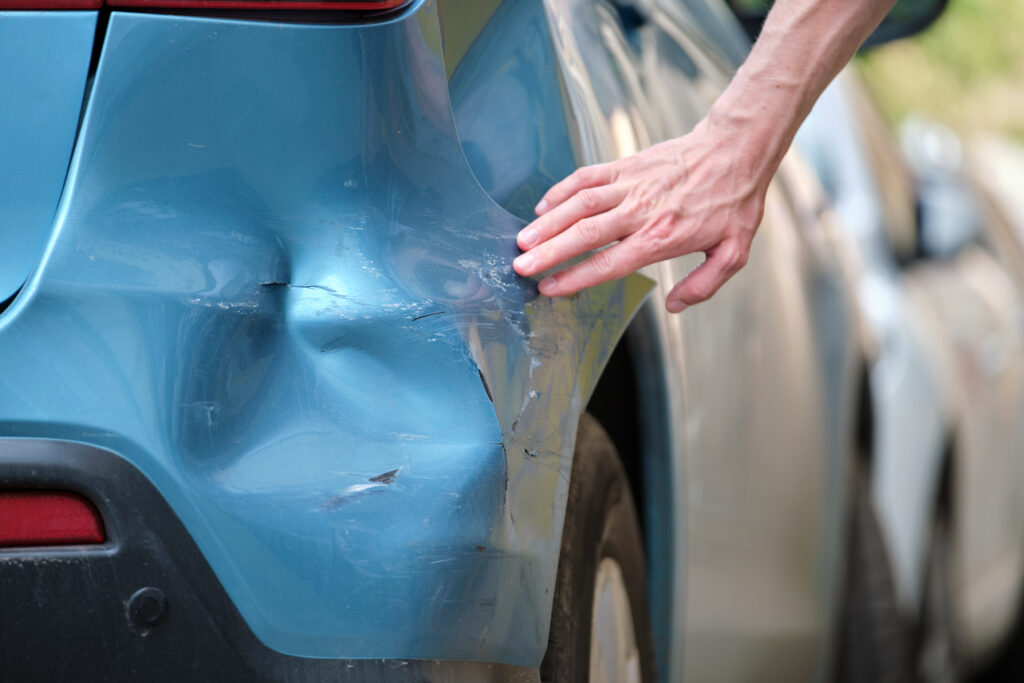
Withdrawing an auto claim is a calculation comparing immediate out-of-pocket repair costs against cumulative 36-month premium surcharges.
1. The Repair Cost Marginally Exceeds Your Deductible
If an independent body shop estimates bumper repair at $1,350 and your collision deductible is $1,000, your carrier’s net exposure is $350. Accepting that $350 exposes your policy to an at-fault surcharge that can add $40 to $90 a month to your bill. In this case, it is financially sound to drop an insurance claim and handle the balance yourself.
2. Protecting a Clean Underwriting Tier
Nationally, an at-fault collision filing increases standard auto premiums between 20% and 45% annually for three to five years. Factoring in that multi-year surcharge makes it easy to see when can you drop an insurance claim to protect your household budget over the long term.
3. Title Complexities and Policy Ambiguities
Drivers who report a loss sometimes run into policy compliance hurdles—such as realizing the car title is held by a family member not listed on the policy declarations. If questions arise about whether insurable interest rules permit insuring a car not in your name, you may decide to drop an insurance claim to resolve title and coverage issues without a formal denial on record.
If structural frame damage is severe or the vehicle is declared an unibody total loss, self-paying makes little sense. In catastrophic cases, you must proceed with coverage. Review our guide on GAP insurance coverage limits and total loss calculations before deciding whether to drop or pursue the payout.
Step-by-Step: How to Drop an Insurance Claim Correctly
Never walk away from a claim assuming an adjuster will mark it inactive. An open file with unallocated reserves can negatively skew your underwriting profile.
[Step 1: Freeze Shop Work] ──> [Step 2: Notify Adjuster] ──> [Step 3: Send CWOP Letter] ──> [Step 4: Secure Closure Letter]
Step 1: Halt Work at the Repair Facility
Contact your body shop immediately. If technicians have begun teardown or placed orders for non-returnable parts under a carrier assignment, you are directly responsible for accrued storage, labor, and restocking fees.
Step 2: Notify the Claims Representative Directly
Contact your assigned adjuster by phone and provide direct instruction: “I am electing to cover this repair out of pocket. Please close this first-party file without payment.”
Step 3: Provide an Auditable Written Request
Follow up by email to document the date, time, and specific policy directive.
Subject: Formal Request to Close Claim #[Your Claim Number] – CWOP
Dear [Adjuster Name],
Regarding Claim #[Your Claim Number] for my [Year, Make, Model], policy #[Your Policy Number]:
Please accept this formal written notice that I am withdrawing this claim. I am handling all associated vehicle repairs out of pocket and will not seek indemnity or physical damage coverage under my policy for this loss date.
Please mark this file as Closed Without Payment (CWOP) and provide written confirmation showing the claim has been closed with zero dollars paid.
Sincerely,
[Your Name]
[Your Phone Number]
Step 4: Archive Your Official Notice of File Closure
Your carrier will issue a formal closing letter confirming the zero-dollar status. File this with your financial records. If an insurance quote later surfaces an active reserve or an erroneous paid balance on your C.L.U.E. report, this document serves as the evidence needed to file an official dispute.
Step 5: Comply with State Crash Reporting Mandates
Dropping an insurance claim does not relieve you of statutory state reporting requirements. Under California Vehicle Code § 16000, for example, drivers must file Form SR-1 with the DMV within 10 days if damage exceeds $1,000 or any injury occurred—regardless of whether you drop an insurance claim with your carrier. Review our step-by-step post-accident reporting checklist to remain compliant with state reporting mandates.
Frequently Asked Questions
Does dropping an insurance claim trigger a fraud investigation?
No. Choosing to pay for your own vehicle repairs is not an illegal act. However, if a policyholder reports an incident, faces inquiries from the carrier’s Special Investigation Unit (SIU), and attempts to drop an insurance claim when asked for dashcam footage, phone logs, or an Examination Under Oath (EUO), the carrier will archive the file with suspicious activity notes. Straightforward claims withdrawn for cost reasons do not trigger fraud investigations.
Can I reopen an insurance claim after I drop it?
Generally, yes. Provided you are within your policy’s contractual reporting limits and your state’s property damage statute of limitations (typically two to three years), you can reopen a dropped claim if hidden structural or mechanical issues emerge. However, if you already repaired the vehicle or altered the physical evidence before an adjuster could document the damage, the carrier can legally deny the supplement for lack of inspection rights.
Can a lienholder stop me if I want to drop an insurance claim?
Yes. If your vehicle is financed or leased, your lender is named as a Loss Payee on your policy. The financing contract requires you to keep the vehicle in sound structural condition. If the repair costs are high and your carrier issues a two-party check made out to both you and the bank, you cannot drop an insurance claim without satisfying the lienholder’s legal interest in preserving the asset’s market value.
Actionable Next Steps: What to Do Today
Before taking action on your claim, work through this practical checklist:
- Obtain an Independent Body Shop Estimate: Secure a detailed, written repair estimate from a reputable local shop before contacting your carrier.
- Calculate Your Loss Spread: Subtract your deductible from the repair total. If the net insurance payout is under $500, dropping the claim is almost always the better financial move.
- Verify Your Claims History Status: Call your agent to confirm whether your policy currently benefits from an active loss-free discount that would disappear if the file remains open.
- Issue Formal Written Directions: When deciding can you drop an insurance claim, document every step. Send the CWOP template above and secure a formal zero-dollar closing letter on company letterhead to keep your underwriting record clean.