
Who Is at Fault in a Car Accident? How Liability and Claims Are Really Decided
Police officers do not decide who is at fault in…
Who Is at Fault “Table of Contents”
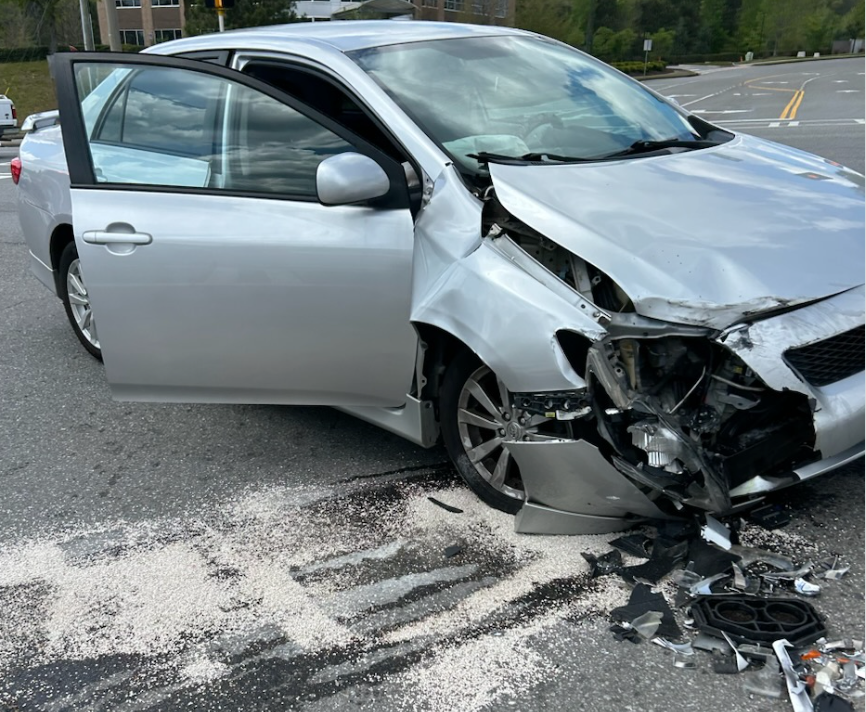
Police officers do not decide who is at fault in a car accident or who pays for your damages.. Insurance claims adjusters do—and their decisions come down to state negligence laws, physical evidence, and policy language. If you and the insurance companies cannot reach an agreement, or if damages exceed policy coverage, a civil court judge or jury makes the final call.
Understanding how adjusters assign liability determines whether your repairs are covered, who pays your deductible, and whether your rates go up.
How to Know Who Is at Fault: Police vs. Claims Adjusters vs. Courts
A common misconception is assuming an officer’s on-scene narrative settles civil liability. Each party evaluates your crash under different legal standards and constraints:
| Authority | Operational Role | Legal Power Over Your Claim |
| Police Officer | Clears the roadway, documents statements, and issues traffic citations. | Investigative, not binding. Traffic citations document statutory motor vehicle code violations. In civil property damage and bodily injury claims, the officer’s personal fault opinion is generally treated as inadmissible hearsay in court unless the officer witnessed the crash firsthand or qualifies as an accident reconstruction expert. |
| Claims Adjuster | Inspects physical damage, reviews witness accounts, applies state negligence rules, and issues payouts. | Contractual. Adjusters determine whether their company will pay out a third-party claim, defend their insured, or file for inter-company arbitration through Subrogation. |
| Civil Court (Judge / Jury) | Evaluates sworn testimony, cross-examines reconstruction experts, and applies statutory tort rules. | Legally binding. Courts only enter the picture if formal litigation is filed by a plaintiff against a defendant. |
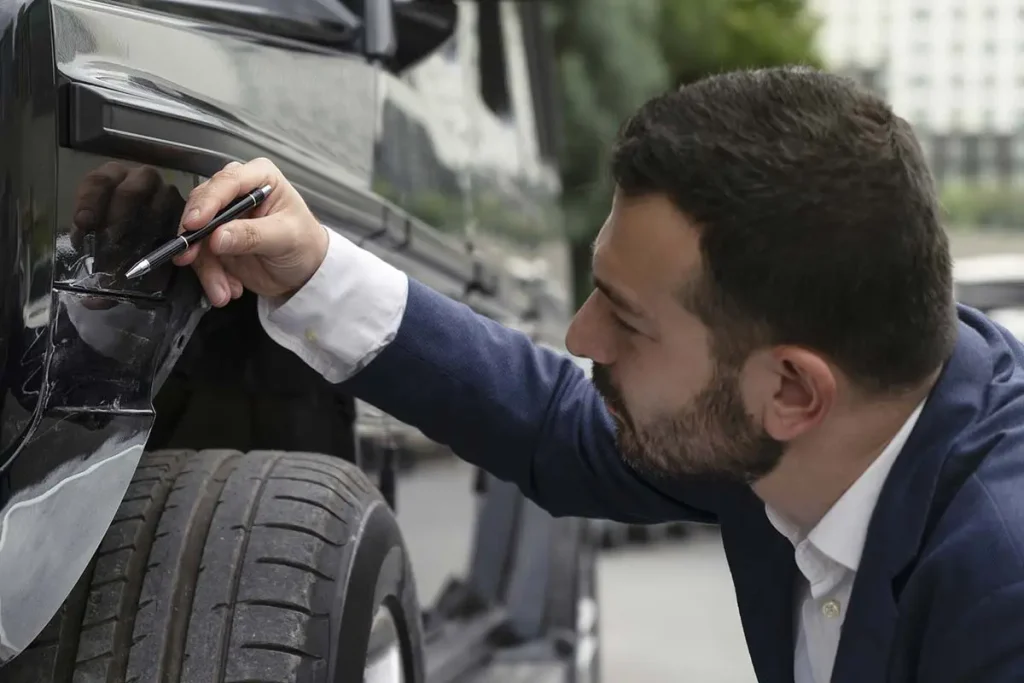
When you file a claim, adjusters from both carriers cross-examine physical damage trajectories, review scene photos, and determine who is at fault under your state’s legal doctrine.
How Negligence Determines Fault Under State Law
Every auto liability determination hinges on negligence: failing to exercise the standard of care that an ordinary, prudent driver would maintain under identical road conditions.
To assign financial liability and prove who is at fault in a car accident, an insurance carrier must establish four legal elements:
- Duty of Care: The other motorist owed a legal duty to operate their vehicle safely under applicable traffic codes.
- Breach of Duty: The motorist violated that duty (e.g., speeding, failure to yield, distracted driving).
- Causation: That specific breach directly caused the collision.
- Damages: Measurable property damage or physical injury resulted from the impact.
State Negligence Frameworks
Where your crash happens dictates what you can recover. A minor degree of shared fault can sharply reduce or completely wipe out your payout depending on the state’s comparative fault thresholds:
| Negligence Doctrine | Legal Threshold | Impact on Your Claim Payout | Example States |
| Pure Comparative Negligence | Payout is reduced by your exact percentage of liability, up to 99%. | If your damages total $20,000 and you are assigned 20% fault, the other carrier pays $16,000. If you are 90% at fault, you can still theoretically recover $2,000 from the other party. | California, New York, Washington |
| Modified Comparative Negligence (50% Bar) | You can recover damages only if your fault is 49% or less. | If you are found 50% or more at fault, you recover $0 from the other driver’s policy. | Colorado, Georgia, Utah |
| Modified Comparative Negligence (51% Bar) | You can recover damages only if your fault is 50% or less. | If you are found 50% at fault, you recover 50% of your damages. If you are 51% at fault, you recover $0. | Texas, Illinois, Florida, Ohio |
| Pure Contributory Negligence | Sharing even a fraction of responsibility eliminates third-party recovery. | If an adjuster proves you were even 1% at fault (such as driving 2 mph over the limit), you are completely barred from recovering compensation from the other driver. | Virginia, North Carolina, Maryland, Alabama, Washington D.C. |
Note on Florida: Florida transitioned from a pure comparative negligence system to a modified comparative negligence system (51% bar) for most negligence actions filed after March 24, 2023 (HB 837).
No-Fault (PIP) States vs. Fault States
In true “no-fault” states (such as Michigan, New York, and New Jersey), your own policy pays your immediate medical bills and lost earnings through Personal Injury Protection (PIP), regardless of who is at fault in the car accident.
“No-fault” rules apply strictly to medical payments and minor bodily injury. Vehicle damage does not fall under PIP; property damage claims still follow standard fault rules, allowing you to pursue the at-fault driver’s property damage liability coverage or file under your own collision policy.
Common Fault Scenarios: Rear-End Collisions and Left Turns
Certain crash dynamics establish a strong legal presumption of negligence during initial claims reviews.
Rear-End Collisions: The “Assured Clear Distance” Rule
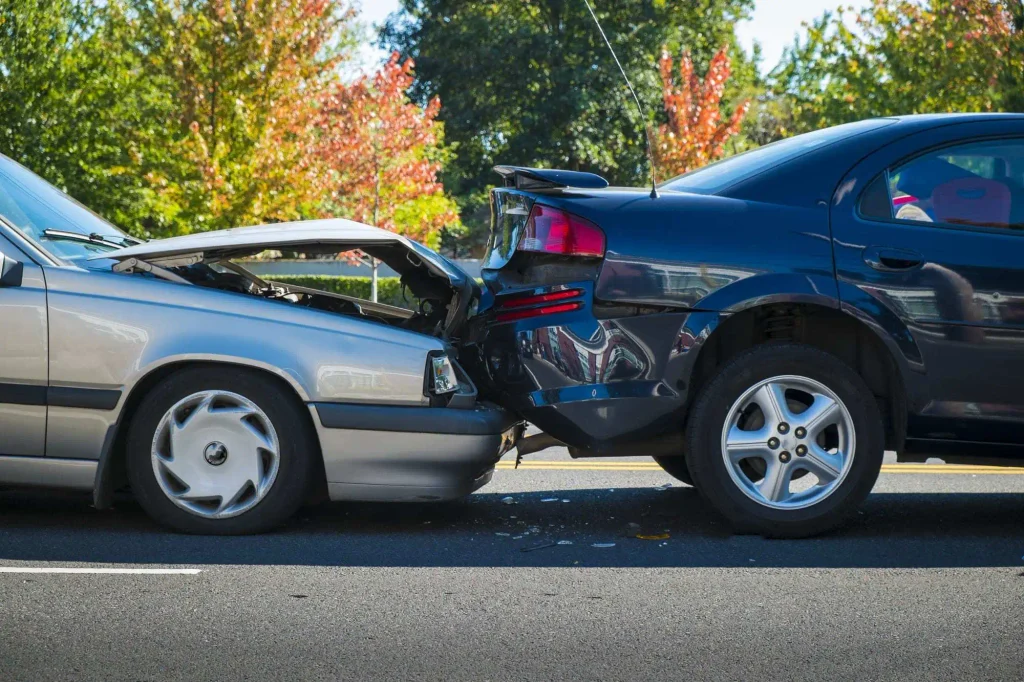
Under standard motor vehicle statutes, drivers must maintain an “assured clear distance ahead” to stop safely behind the vehicle in front of them. For this reason, adjusters start with a default presumption that the rear driver is 100% at fault.
That presumption can be rebutted with clear physical evidence under specific conditions:
- Non-functioning or dark brake lights: The lead vehicle gave no visible warning of deceleration.
- Aggressive cut-offs: A vehicle merged abruptly into your direct stopping distance and immediately braked.
- Rolling backward: The lead vehicle rolled backwards from an incline or backed up into traffic.
- Chain-reaction pileups: A trailing third vehicle rammed your car forward into the lead car while you were already stopped safely.
Left-Turn Collisions and Protected Right-of-Way
Vehicles turning left across opposing lanes must yield to all oncoming traffic that is close enough to constitute an immediate hazard. The turning driver is routinely assigned primary or sole fault.
To shift liability back to the oncoming driver, you must prove a substantial statutory breach:
- The oncoming driver ran a steady red light while you cleared the intersection on an amber or protected green arrow.
- Documented, egregious speeding by the oncoming driver that prevented a reasonable assessment of gap distance.
Escalated Claims: Lawsuits and Wrongful Death
Most property damage claims settle administratively between carriers. When severe injuries or fatalities occur, claims frequently escalate outside standard claims channels.
Filing a Claim vs. Filing a Lawsuit
- Filing an Insurance Claim: An administrative negotiation with a claims representative to settle losses under contract limits in exchange for signing a property or bodily injury release of liability.
- Filing a Lawsuit: Serving a formal Summons and Complaint in civil court. This becomes necessary when the opposing carrier denies liability, offers a bad-faith settlement below verified specials, or when policy limits are insufficient to cover catastrophic losses.
Wrongful Death Actions in Fatal Collisions
When an at-fault driver’s negligence causes a fatality, the civil action becomes a statutory wrongful death claim, brought by designated surviving heirs or the personal representative of the decedent’s estate.
Standard auto bodily injury limits ($25,000 to $100,000 per person in many states) are exhausted almost immediately in fatal collisions. Once the policy limits are tendered, legal attention shifts to:
- Commercial or personal umbrella policies.
- Employer liability (respondeat superior), if the at-fault driver was driving a company vehicle or running a work errand.
- Personal asset recovery against the negligent driver via a civil judgment.
5 Steps to Dispute an Unfair Fault Determination
If an adjuster assigns you an unjustified percentage of fault, take these direct steps to challenge the finding:
- Demand the Adjuster’s Detailed Liability BreakdownRequest a written liability breakdown explaining the specific statutory or physical basis for their percentage split. Pinpoint whether they relied entirely on an inaccurate driver statement.
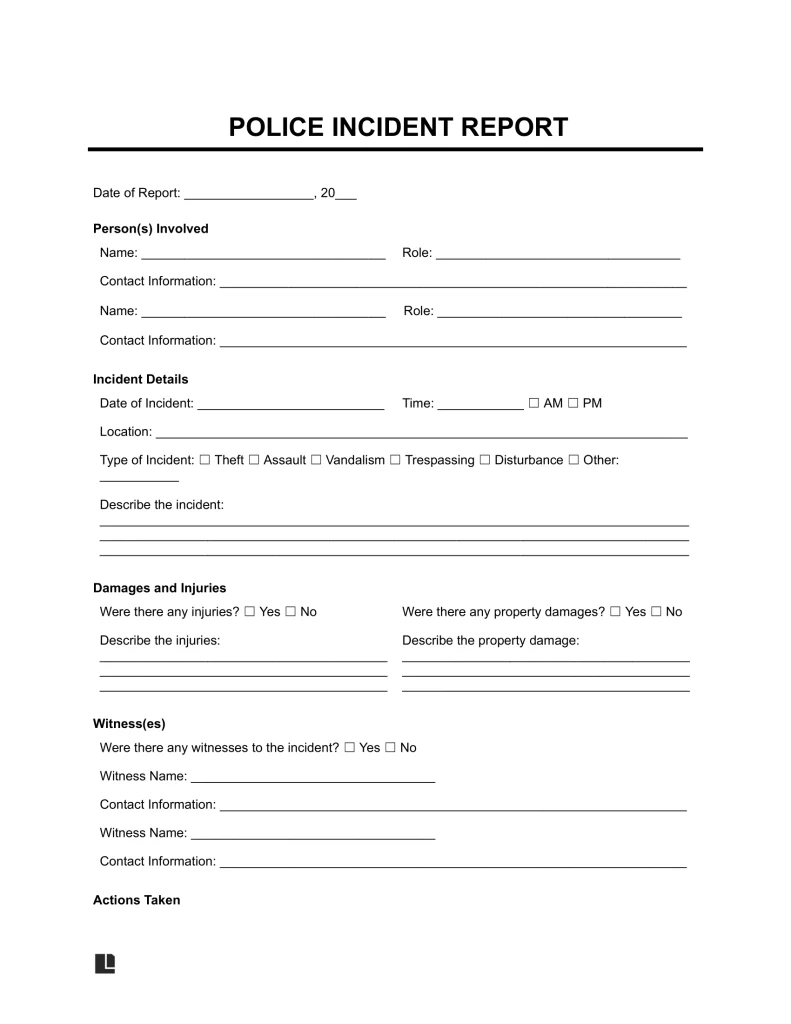
- File a Police Report AmendmentOfficers generally do not alter their personal opinions, but they will update factual errors (e.g., incorrect vehicle positions, incorrect weather details, missed witnesses). Submit dashcam stills or repair invoices to the reporting precinct and request a Supplemental Accident Narrative.
- Preserve Objective Telematics and Black Box DataModern vehicles log pre-crash telemetry (speed, braking, throttle, steering angle) on the Event Data Recorder (EDR). If fault is disputed in a major collision, issue a formal spoliation letter or hire an independent reconstruction specialist to download the EDR data.
- Demand Inter-Company ArbitrationIf you have collision coverage, file through your own insurer and pay your deductible. Once your repairs are complete, your insurer will pursue the other carrier through subrogation. If the carriers disagree on liability, they take the dispute to Arbitration Forums, Inc., where an independent panel makes a binding liability ruling without you having to hire an attorney. If your carrier wins, your deductible is reimbursed.
- File a State Insurance Department ComplaintThe National Association of Insurance Commissioners (NAIC) sets fair claims standards enforced by state Departments of Insurance (DOIs). If an insurer violates statutory response windows, misstates policy terms, or refuses to review objective video evidence, file an online consumer complaint with your state’s DOI. Carriers are legally required to furnish a formal written justification directly to the state regulator.
To learn more about our independent research and editorial standards, check our About Us page.
Frequently Asked Questions
When determining who is at fault, can both drivers share 50% liability?
Yes. Insurers frequently issue a 50/50 liability split in dual-lane merging disputes, intersection accidents without independent witnesses, or simultaneous backing crashes in parking lots. In modified comparative fault states with a 50% bar rule, a 50/50 split completely prevents either driver from collecting compensation from the other party’s liability coverage.
What happens if the other driver’s policy limits don’t cover my damages?
Once the at-fault carrier pays out its policy limits, you must look to your own policy. You can use your Collision coverage for property damage, and your Underinsured Motorist (UIM) coverage for remaining medical expenses and wage loss. If you do not carry UIM, your only alternative is obtaining a personal judgment against the driver in civil court.
What to Do Before Calling the Adjuster
Take these actions immediately to protect your claim:
Decline to Give a Recorded Statement to the Other Carrier: You have a contractual duty to cooperate with your own insurer, but you are under no legal obligation to give a recorded interview to the other driver’s adjuster. Politely decline until you have your repair estimates and medical records organized.
Save Raw Video Files: Export dashcam or surveillance video directly to an external drive or secure cloud storage. Do not edit, cut, or compress the video file, as metadata timestamps prove file authenticity.
Keep an Email Paper Trail: Summarize every phone conversation with an adjuster in a short email: “Per our call on [Date], you confirmed receipt of my scene photos and indicated a liability determination will be issued by [Date].”